
As modern Operational Technology (OT) and enterprise software architectures converge, the "air-gapped" security model is officially dead. Whether managing a cloud-connected industrial unit or a distributed network of critical medical devices, our attack surface is constantly exposed to the public Internet.
To bridge the gap between reactive patching and proactive defense, my recent engineering work focused on advanced threat modeling, executing large-scale Dynamic Application Security Testing (DAST) via infrastructure scanners, and designing mitigation architectures to conceal vulnerable hosts from malicious actors.
Here is a technical breakdown of how I approached these challenges, along with actionable takeaways for engineering secure deployments.
1. Architectural View & Multi-Vector Threat Modeling
To secure a system, you must understand how its architecture evolves and exposes data. I evaluated infrastructure security across multiple generations of connectivity, mapping out distinct internal and perimeter attack vectors.
[ Generation 1: Monolithic ]  --> Dedicated physical lines (Air-gapped)
                     |
[ Generation 2: Distributed ] --> Local Area Networks (LAN) exposure
                     |
[ Generation 3: Networked ]   --> Wide Area Networks (WAN) & Standard IP Stacks
                     |
[ Generation 4: Cloud & IoT ] --> Public Cloud Storage, AmI, & Dynamic Web Interfaces
- The Outsider Threat: Malicious actors leveraging automated crawlers to discover exposed web interfaces, unsecure banners, and open standard ports.
- The Insider Threat (and Spy Agents): Malicious internal nodes or localized malware attempting vertical/horizontal pivoting. This highlights why perimeter defense is insufficient; we require internal segmentation and stateful anomaly detection.
- Architectural Vulnerability: The risk inherent in legacy systems or poorly configured software when exposed to standard IP communication stacks without cryptographic wrappers or Access Control Lists (ACLs).
2.Infrastructure DAST: Simulating the Adversary with Shodan, Nmap, & Censys
To quantify true systemic risk, I executed a series of Dynamic Application Security Testing (DAST) audits targeting infrastructure components. Using an experimental deployment, I analyzed how tools like Shodan, Nmap, and Censys probe networks to fingerprint endpoints.
Key Finding: The Risk of Passive Reconnaissance
Unlike traditional intrusive tools, internet-wide scanners continuously cache state. An adversary doesn't need to scan your network actively—they simply query a public database to find your vulnerabilities.
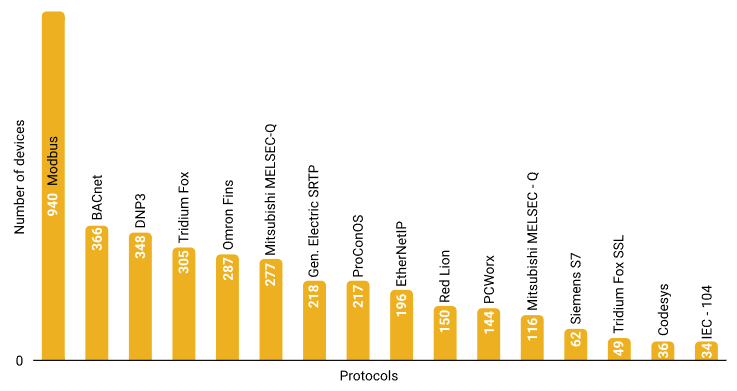
During an experimentation sprint focused on the geographical zone of Sweden, I analyzed the real-world visibility of critical services across popular protocols (Modbus, BACnet, DNP3). See part of publishable results below
| Protocol | Standard Port | Found Exposing Ports | Successfully Fingerprinted |
|---|---|---|---|
| Modbus | 502 | 940 devices | 462 devices (Revealed vendor, site type, heating/cooling metrics) |
| BACnet | 47808 | 366 devices | 127 devices (Exposed pump regulators, automation engines) |
| DNP3 | 20000 | 348 devices | 101 (Some Ambiguous banners due to overlapping) |
| Manufacturer | Type | Number of Devices | Vulnerability |
|---|---|---|---|
| Lantronix | External/Serial-to-Ethernet Device Server | 48 | Leaking Telnet Password |
| Siemens | Unknown Device | 11 | Network traffic and user program could be modified |
| Ubiquiti | Router, Switch, Nano Station, Cloud key | 423 | DDoS amplification through Ubiquiti discovery service on port 10001 |
| Nordex | Wind Turbines | 17 | XSS on its web interface |
| VNC | VNC | 9 | Authentication disabled |
Technical Scanners Comparison:
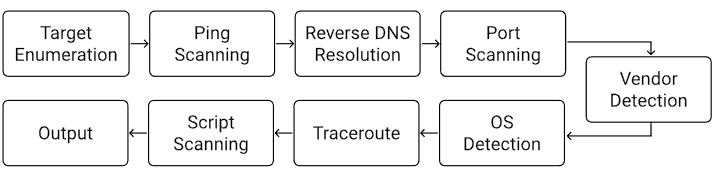
Nmap: Excellent for fine-grained vendor detection and OS fingerprinting, but highly synchronous and "noisy." A default scan on a single subnet can easily generate up to 1 GB of network traffic, which trips Intrusion Detection Systems (IDS).
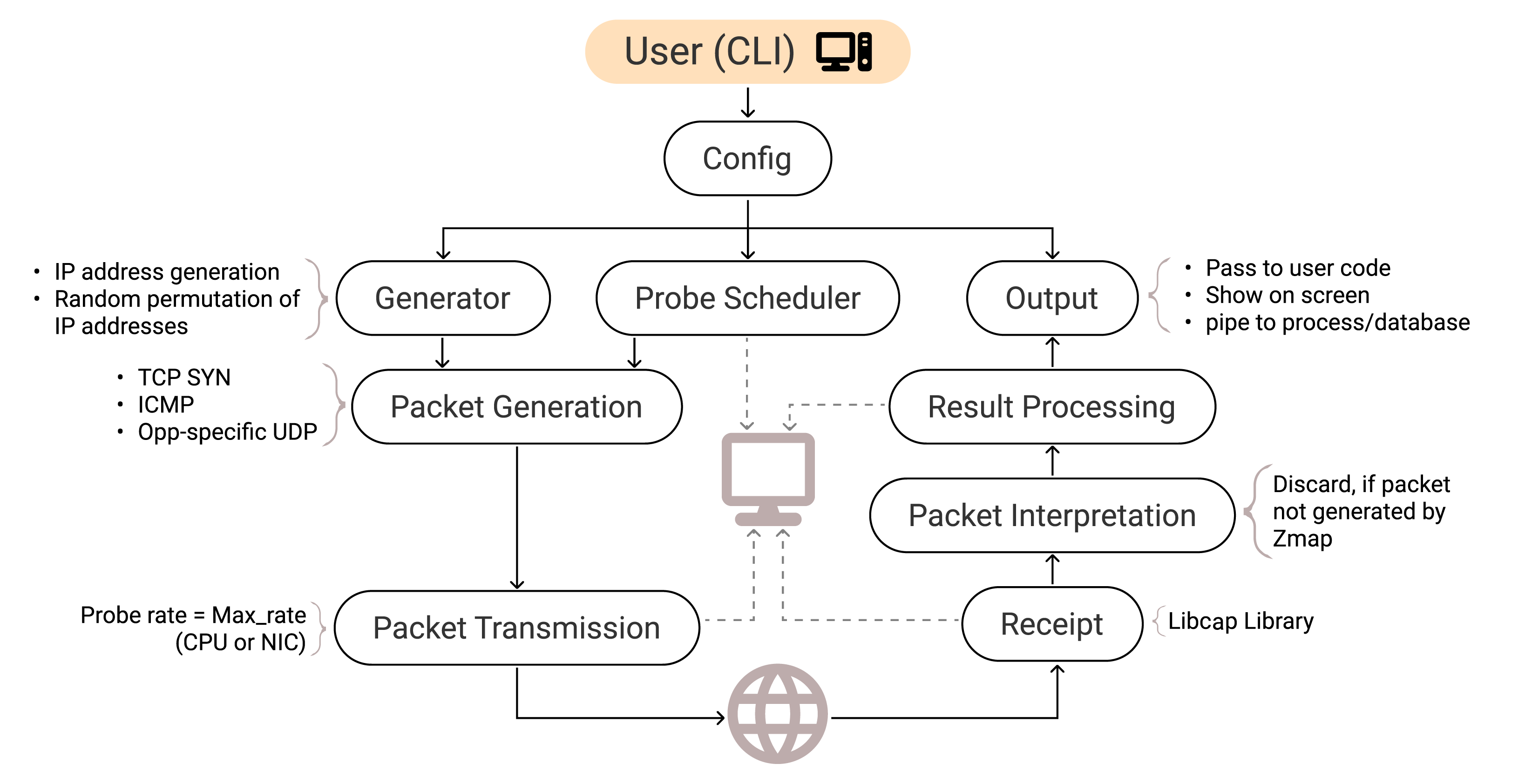
ZMap: Bypasses the local kernel's TCP/IP stack to stream raw SYN probes, capable of scanning the entire IPv4 space for a single port in under 45 minutes.
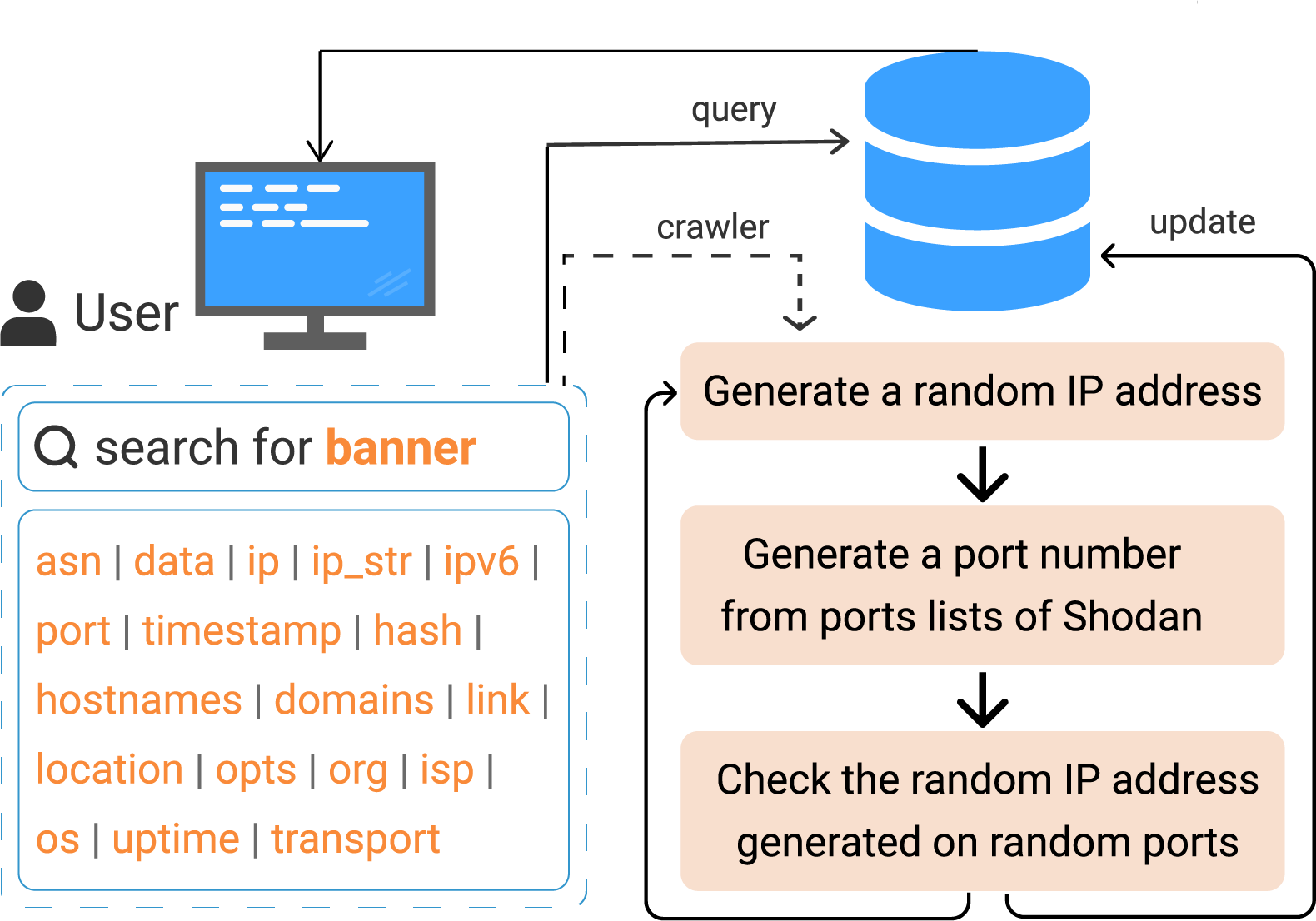
Censys & Shodan: Distributed scanner architectures utilizing automated banner grabbing. Shodan uses at least 29 distributed crawler nodes globally to ensure country-wide IP blocking fails to intercept its data collection.
3. The Impact of Active Probing on Fragile Software Platforms
A major takeaway from my infrastructure testing is that aggressive active scanning can be structurally hazardous to legacy or fragile device software stacks.
Critical Warning for Field Engineers: > Many legacy components lack network protocol robustness. Probing them with malformed packets or high-frequency SYN packets during aggressive version/OS detection can lead to unexpected buffer overflows, protocol crashes, or localized Denial of Service (DoS).
When configuring vulnerability scanners in a staging environment, safety constraints must be strictly programmed:
[Trigger Scan Job]
       |
       v
[Fragile Device Detected?]
       |-- YES --> Halt Aggressive Scan --> Initiate "Smart Scanning" (Modbus/BACnet Probes Only) -> Disconnect
       |-- NO  --> Proceed with Full DAST Audit (XSS, CSRF, Header Injection)
Takeaway: Relying on a single scanner creates a defensive blind spot. A robust CI/CD security pipeline must orchestrate multiple tools to cross-reference discovered services against the National Vulnerability Database (NVD).
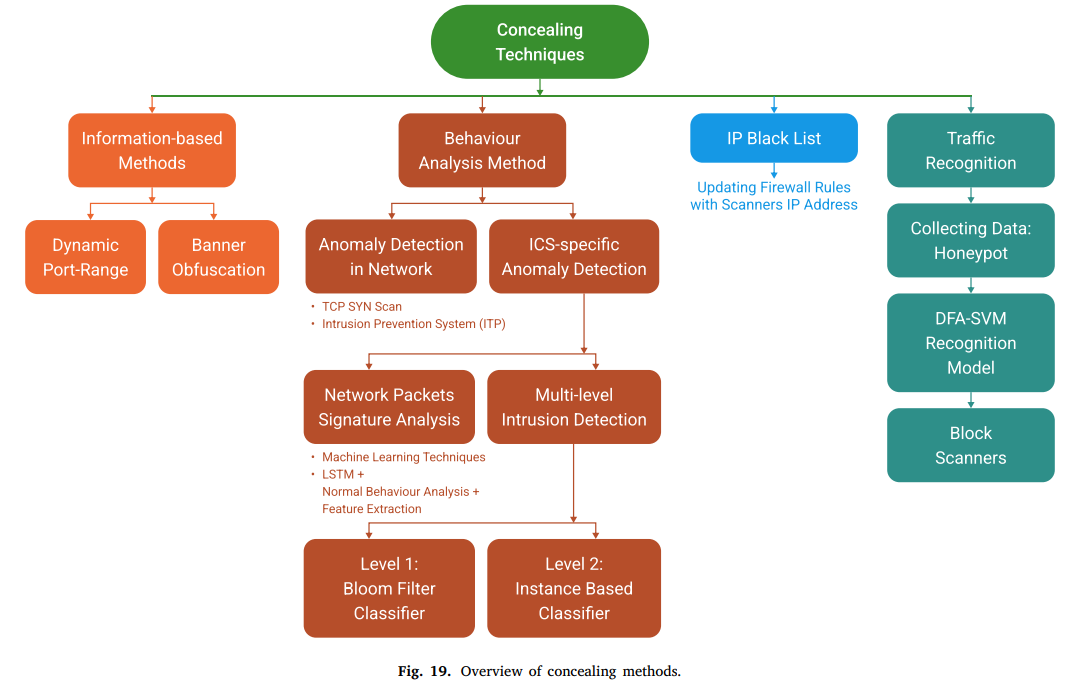
4. Advanced Concealing Techniques: Moving Beyond "Security by Obscurity"
Detecting vulnerabilities is only half the battle. If a critical system platform cannot be instantly patched due to strict deployment models or uptime SLAs, we must reduce its attack surface by concealing it from scanners.
I evaluated and implemented a multi-tiered taxonomy of defensive concealing techniques:
5.Takeaway
- The Air-Gapped Model is Extinct: As Operation Technology (OT), critical infrastructure, and distributed platforms converge with public cloud stacks, systems are continuously exposed to automated, internet-wide crawling. Defensive engineering must shift from relying on perimeter isolation to building resilient, host-level security frameworks.
- Passive Caching is the New Reconnaissance: Attackers no longer need to actively scan your network and risk triggering intrusion alarms ; they can simply gather highly targeted string metadata (such as vendor names, models, and operating system firmware) directly from public scanner databases like Shodan or Censys.
- Active Probing Destabilizes Fragile Platforms: Aggressive network scanning presents severe structural hazards to legacy software stacks ; executing complex application handshakes or malformed version probes against poorly-coded embedded devices can easily cause memory leaks, protocol crashes, or localized Denial of Service (DoS).
- Transition to Identity-Aware Networking: While standard concealing methods like banner obfuscation reduce the immediate attack surface , true long-term security requires protocols like Host Identity Protocol (HIP) to decouple an endpoint's host identity from its network location. By enforcing mutual cryptographic authentication before a connection is even acknowledged, identity-aware networks render automated scanning probes completely useless, dropping unauthorized packets silently before they can hit fragile application parsing engines.
Source: Published Result (partially)
Member discussion: